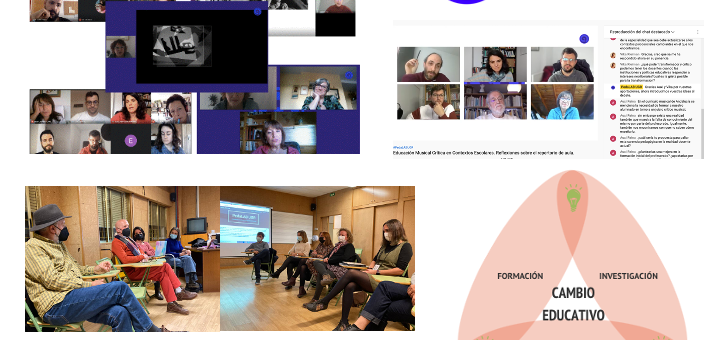
Hyflex . Towards a hybrid and flexible instruction?
Blending learning or hybrid instruction concepts refers to teaching modalities that mix face-to-face teaching situations with virtual or digitized teaching formats (Area-Moreira, 2022).

University Network for Research and Educational Innovation
Blending learning or hybrid instruction concepts refers to teaching modalities that mix face-to-face teaching situations with virtual or digitized teaching formats (Area-Moreira, 2022).
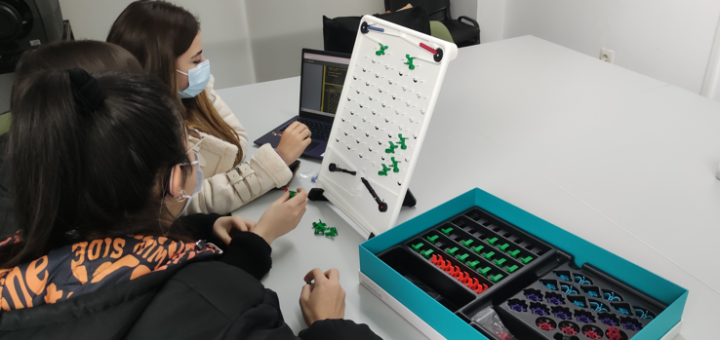
The «Future Classroom Lab» (FCL) was first developed by European Schoolnet through the iTEC (Innovative Technologies for an Engaging Classroom) research project funded by the European Commission and involving 26 partners: ministries of education, technology providers and research organisations. iTEC aimed to transform and expand the use of technology in learning and teaching in compulsory education. Through iTEC, educational tools and resources were tested with some 50,000 students in 2,624 classrooms in 20 European countries. One of its main results was the design of the FCL.
Engagement with Information and Communication Technologies (ICT) is reflected in the manifest behavior of students with the use of technologies, as well as by cognitive and motivational factors that favor ICT-mediated activities. Knowing some of the factors that influence this engagement is a tool for the design of resources and activities that improve student learning.
In times like these we are going through, with the questioning of gender equality, macho attacks, sexting, access to digital pornography, etc., among young people, it is vitally important to understand how the subjectivities and gender identities of adolescents are built in the digital environments in which they move. This is the purpose of the EDIGA research project (Entornos Digitales e Identidades de Género en la Adolescencia – Digital Environments and Gender Identities in Adolescence), funded by the Spanish Ministry of Science, Innovation and Universities (PID2019-108221RB-I00). It aims to analyse and understand the role that digital environments play in the process of constructing gender identities at this stage of development in different socio-cultural contexts.
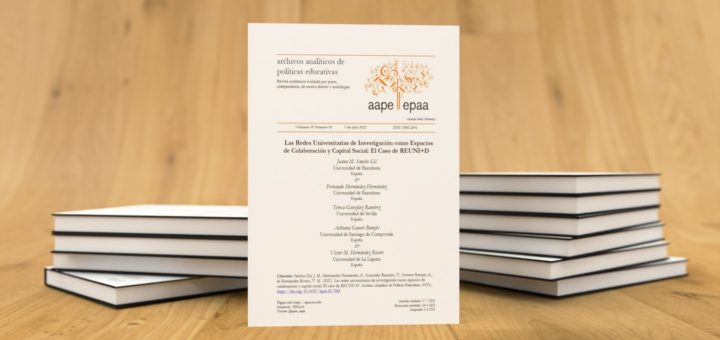
Collaborative networks are considered a critical factor in developing the human species and any living being. Life would not be possible without the dynamic interaction between plants, animals, micro-organisms, non-living beings, and their environment. Nor would human life be possible without considering its physical, social, cultural, and technological environments as a unitary network living within a historical context.
It has become a cliché to point to the widening gap between the forms of communication that students develop in their personal lives and those required by their teachers. The exciting work carried out by Cope and Kalantzis (2000), members of the New London Group, summarized in the Pedagogy of Multiliteracies, mentioned this gap almost thirty years ago. In 1994, a group of ten academics held a series of meetings in New Hampshire, USA, in a hotel room called New London. These meetings claimed for a change in educational institutions to prepare students to navigate, produce and critically interpret emerging discourses in an increasingly diverse and complex world with increasingly sophisticated modes of communication.
Esbrina Research Group (University of Barcelona) presentation
Even before the school closures in the wake of the Covid-19 pandemic, but especially since then, digital educational platforms have burst into the classrooms of schools in different parts of the world. In this context, large digital platform providers such as Google, Amazon or Microsoft have demonstrated an efficient capacity to respond to a situation that exceeded the ability of many public administrations to deal with the sudden digitisation of educational activities. However, the entry of these and other corporations (also known as BigTech) into our education systems had been years in the making.
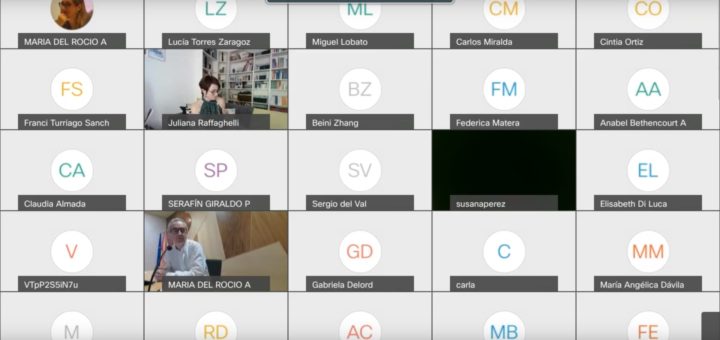
Recording of the round table Round Table: Views from Open Science, which took place on May 27, 2022 in Valladolid within the IV Summer School: The doctoral thesis and Open Science: dilemmas, trajectories and decision making, with the participation of Juliana Raffaghelli, Jesús Valverde Berrocoso and Pablo Rivera Vargas, and moderated by Eduardo Fernández.
It is obvious that research is key to improving education, but how to ensure that this research has a real transfer and impact on educational contexts does not seem to be such a simple task. We raise this concern in the research group every time we start a new project: how to shorten the distance that separates the University and the School, seeking to reduce the existing gaps between the observer and the observed (Sancho-Gil & Correa-Gorospe, 2019).
From ICUFOP we have always been very respectful of the ethical considerations of research. Informed consent at the beginning, negotiation in the process and the return of reports in the final phase, but we were observing how this way of proceeding did not eliminate the distance between the research team and the team of teachers who were involved in the research we were conducting.
For this reason, for the development of the projects in which we are currently involved, NOMADIS and PedaLAB, we considered the possibility of exploring other forms of research.
Red Universitaria De Investigacion e Innovacion Educativa. Conectando Redes y Promoviendo el Conocimiento Abierto
Contacto
contacto@reunid.eu

Esta web es parte de la actuación “RED2022-134187-T”, financiada por MICIU/AEI/10.13039/501100011033