
REUNI+D Blog

0

Screens in Early Years Education? Beyond the Ban: Realities, Myths and Research-Based Proposals

The relationship between early childhood and technology is currently caught in a genuine crossfire. Between those calling for a total ban on screens in the classroom and those championing them as indispensable tools for the future, families and teachers often find themselves lost in a sea of contradictions. However, making the right decisions does not require doomsday rhetoric or technophilic hype; it requires scientific evidence.
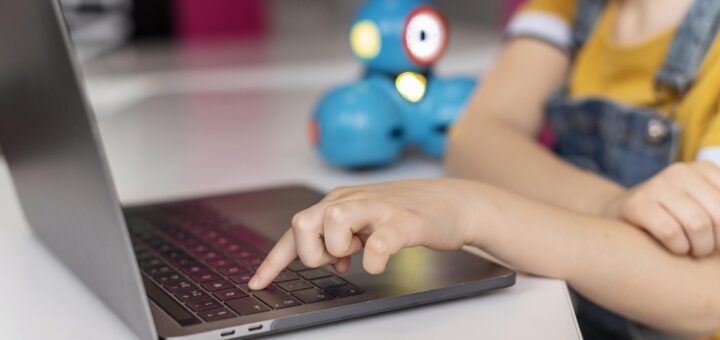
A recently defended doctoral thesis, entitled “El uso de recursos educativos digitales en la infancia: prácticas tecnológicas de niñas y niños de 3 a 6 años en Canarias” (The use of digital educational resources in childhood: technological practices of children aged 3 to 6 in the Canary Islands), aimed to conduct a diagnostic-descriptive review of how children in the second cycle of Early Years Education consume and interact with Digital Educational Resources (DERs).

0

How AI Is Leading Us Toward Deprofessionalization Through Cognitive Surrender: A Case from Background Research on Adolescents’ Relationships with Influencers

It is well known that artificial intelligence has been given free rein among our students, who have enthusiastically embraced it not only for their academic work, but also as a confidant, adviser, companion, therapist, and relationship counsellor. The impact that AI use is having on university teachers and researchers is equally well documented, as it is driving a radical transformation of their habits and professional practices in teaching and research (Robert, 2026; Zhao et al., 2026; Zawacki-Richter et al., 2019).

0

The aConvive Project: Critical Digital Literacy and School Coexistence, Two Inseparable Areas of Learning

Let’s imagine a secondary school: all kinds of jokes, memes, and comments built from videos, photographs, and audio clips circulating publicly and exposing both teachers and students alike. This is no longer just about Instagram and TikTok. Many AI platforms are a goldmine for generating content that undermines respectful coexistence among peers. The collateral damage has become part of daily life, and often no one really knows who started the chain. When the alarms go off, the standard protocol kicks in, to restore order when the situation has already become unmanageable. Institutions, clearly overwhelmed by curriculum demands, planning, and bureaucracy, are no longer asking how to prevent it: the question is how to survive when everything blows up.

0

Circling Back to AI. A look at its ethical dimension in educational institutions

Social perceptions of artificial intelligence (AI) are deeply shaped by the media and its often apocaliptic-toned narrative (Coeckelbergh, 2020), fostering the emergence of contrasting technophile–technophobe profiles. This informational distortion not only molds collective imagination (Morozov, 2013): it also permeates educational contexts, where technology, through lenses of fear or fascination, is frequently discussed, although rarely done through a critical, nuanced understanding of a phenomenon that carries both risks and promises…

0

Technological scenography in the art classroom: live drawing, visual storytelling, and improvisation as a pedagogical tool

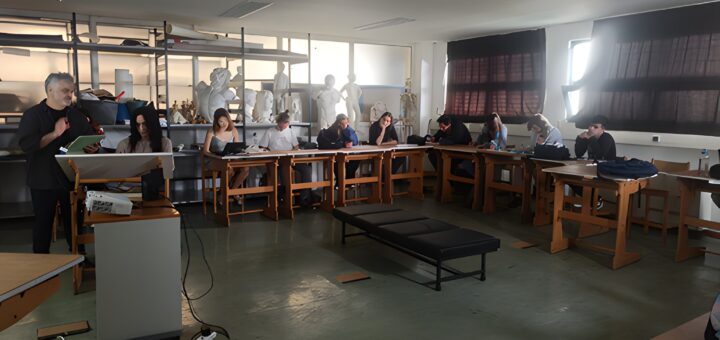
A researcher from the University of the Basque Country (UPV/EHU), member of the Elkarrikertuz research group, is conducting a research stay at the University of Madeira with the aim of exploring the potential of basic and mediating learning technologies in the visual arts. The project focuses on the use of the projector and document camera as mediating pedagogical devices that transform the classroom. In subjects related to art education, students draw while their graphic production is recorded in real time by the document camera and simultaneously projected for the rest of the group. While drawing, the artist narrates their decisions, turning the graphic act into a reflective process.

0

Digital platforms and child protection in schools: A perspective from the educational community

In recent years, education systems have experienced a remarkable acceleration in the incorporation of digital technologies, a process that intensified decisively during the COVID-19 pandemic. In the Spanish context, this period acted as a catalyst for a transition that was already underway, positioning digital platforms as essential elements for ensuring the continuity of school activity. The widespread adoption of these digital environments created new opportunities related to communication, management, and teaching, but it also raised significant questions about data protection, digital security, and, in particular, child protection.

Libro Blanco sobre la Investigación Educativa en Iberoamérica

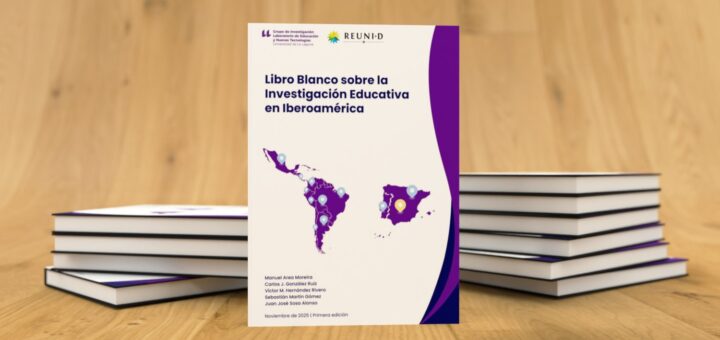
Educational research in Latin America and Spain has grown remarkably in recent decades, but its knowledge remains dispersed among universities, research groups, and countries. This white paper was created to offer a rigorous and up-to-date overview of those conducting educational research in the region, identifying thematic areas, methodologies, educational levels, and collaborative networks.

0

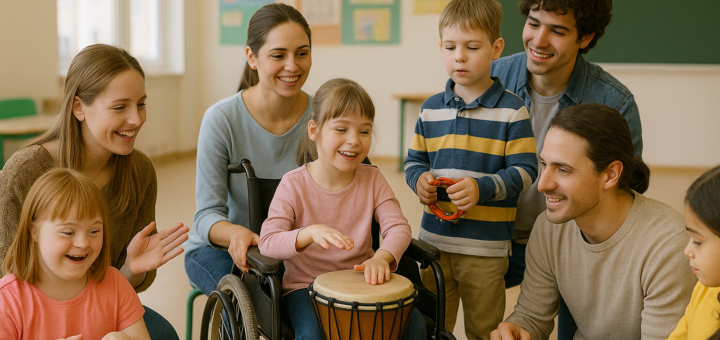
In the Key of Inclusion: How Music Trains Teachers in Life Skills

In contemporary teacher education, mastery of academic content is no longer sufficient. Prospective teachers must also develop personal and social capacities that enable them to work with diverse student populations, manage complex situations, and cultivate more humane classroom environments. Among these competencies, three have guided this project—empathy, resilience, and prosocial behaviour—in alignment with the line of research we have been advancing (Cortón-Heras et al., 2023a).

0

The Inclusion Still Pending: Truly Feeling Part of It. Based on a research experience with deaf students with cochlear implants

When Julia walked into a primary school classroom for the first time, it wasn’t the color of the walls or the buzz of her classmates that struck her the most. It was the noise. A constant murmur mixed with the teacher’s voice, footsteps in the hallway, and the metallic scraping of chairs. For most people inhabiting that space, all of that was simply part of the everyday school landscape. For Julia, who uses a pair of cochlear implants (Cortés, 2024), it was an invisible barrier that turned the classroom into an obstacle course she had to navigate again and again.