Exploring creative digital potential from a techno-poetic approach: an experience in Social Education
Therefore, both the GIR-CEAEX’s track record in developing educational and social experiences for teaching innovation with Social Education students, as well as the need to educate citizens in an era of digitalisation, automation and algorithms through critical, creative and socially relevant training experiences, have been the starting points for this experience.

The focus of this innovation has been placed on students, who develop digital creations that explore the sensitive, expressive and experimental dimension of technology, beyond its purely functional use. This approach is known as the technopoetic approach and seeks not only to use digital tools, but also to expand their artistic dimension and poeticise technical mediation. We find this perspective really useful in Social Education, as it allows us to reconfigure formats and combine languages (text, image, sound, data, objects) to promote critical and contextualised appropriations.
To further expand our understanding of this concept, which is still in its infancy in educational research, we emphasise that the term was coined by researchers in the arts and humanities in the Latin American context, with the aim of generating new understandings and perspectives on society through interaction with the digital world. Claudia Kozak is one of the leading authors in the Argentine context and identifies technopoetics as ways of looking at our joys and nightmares in the era of the digital revolution (2012).
Based on this idea, our educational innovation is structured around three well-integrated strategic lines:
- The formation of a teaching team specialised in these creative multimodal digital practices.
- The implementation of creative workshops for guided experimentation that emerge from diverse uses of digital technology.
- The strengthening of social and professional guidance through partnerships with local entities.

At the methodological level, we integrate challenge-based learning, project-based learning, and service learning. The objective of this plural and active methodological approach is to ensure community relevance and interdisciplinary transfer. Assessment, one of the most complex issues in this experience, has been approached using a rubric to evaluate technological mediation, artistic creation, subjective-affective experience, collective participation, and the socio-professional orientation of the students’ experiences. This rubric, however, serves as a starting point for the design of other assessment techniques that allow for the depth of both the products and the process to be captured.
With the aim of working on the social dimension and commitment to the students’ environment, we are collaborating with four social, educational and cultural entities in the city, which propose techno-media challenges to the students:
- Teloncillo Teatro, through the Te Veo en la UVa conference.
- Cruz Roja Juventud, through its Social Innovation conference at the UVa’s Faculty of Education and Social Work.
- Active Life centres for the elderly, through the UVa’s University Social Responsibility programme.
- The intellectual disability and autism organisations San Juan de Dios, Fundación Personas and Autismo Valladolid through the PID ‘Tejiendo Inclusión en la UVa’ (Weaving Inclusion at the UVa).
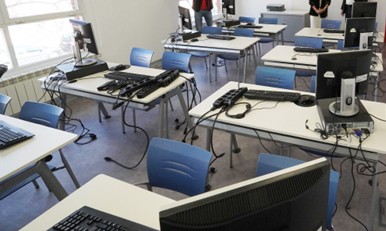
The expected impact includes increasing students’ creative agency and multiliteracy, consolidating a teaching team with the capacity for didactic transfer, and generating stable links with external entities through digital products with social significance. More specifically, it is hoped that students’ skills will be improved in order to reduce socio-digital gaps, which include (Jan van Dijk, 2020):
- Access gap: inequalities in the availability of and access to digital technologies due to geographical, economic, gender, age or cultural limitations.
- Usage and skills gaps: inequalities in how and how much people use technologies, and their skills in using them effectively.
- Appropriation gaps: inequalities in the benefits and opportunities generated by the ability to understand and value the use of these technologies in our daily lives.
With regard to the aforementioned skills, we base ourselves on the model proposed by Uniovi (2014), which includes:
- Technical skills, both in the use of digital tools and in solving everyday problems.
- Social and communication skills, in relation to information in different formats, the integration of social networks, and collective creation and relationship building.
- Critical-reflective skills, including critical analysis of digital media, strategies for overcoming the digital divide, and critical evaluation of the digital information created.
It is still too early to report results, but for now we can celebrate the positive reception of the teaching innovation project, the enthusiastic participation of the students, and the large turnout at the methodological seminars linked to this experience.
References
Kozak, C. (2015). Tecno-poéticas argentinas. Archivo blando de arte y tecnología. Caja Negra.
Universidad de Oviedo. (2014). Unidad 4: Diseñando Experiencias de Alfabetización Digital [Video]. YouTube. https://www.youtube.com/watch?v=TfNRLyvn7-A
Van Dijk, J. (2020). The digital divide. John Wiley & Sons.
Authorship:
Mónica Salcedo Diéz
Research Group on Citizenship, Learning Ecologies and Expanded Education (CAEX)
University of Valladolid